

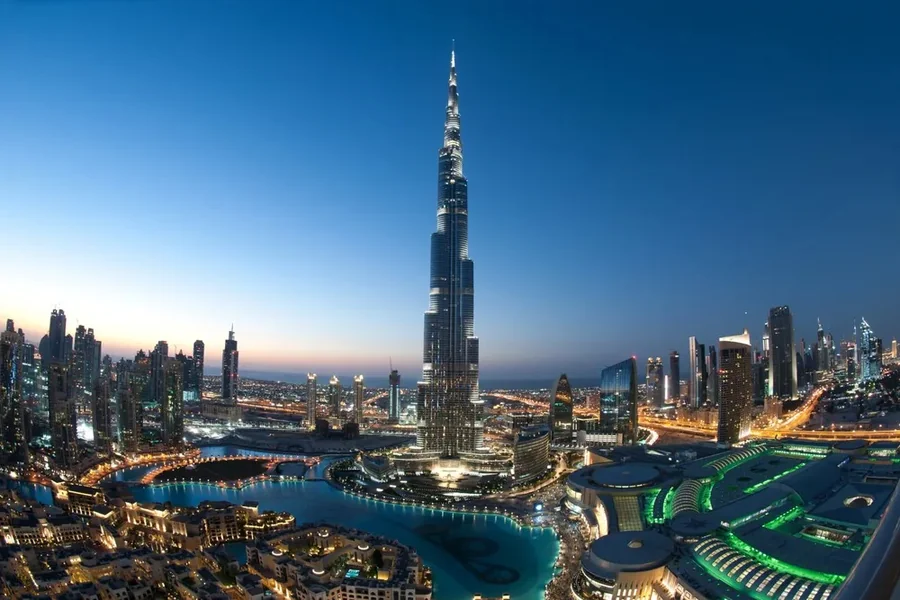
Dubai’s skyline is a real-time graph of its economic ambitions. The commercial real estate sectors of offices, serviced offices, and warehouses are not merely responding to demand; they are actively shaping the city’s transition into a knowledge-based, logistics-led, and innovation-driven hub. This is a look at the strategic forces molding the market today.
The Office Market: Decentralization and the New Business Districts
The long-standing dominance of central business districts (CBDs) like Sheikh Zayed Road is being challenged by the strategic rise of specialized, decentralized hubs. This polycentric model is a deliberate outcome of Dubai’s urban planning.
- The Cluster Model: Dubai has masterfully created free zones that act as industry-specific magnets. Dubai Internet City and Dubai Media City pull in tech and media firms, while the Dubai International Financial Centre (DIFC) is an unbeatable magnet for finance. This clustering creates powerful ecosystems that transcend the need for a single, central address.
- Value Proposition: Emerging areas like Dubai Creek Harbour and the continued expansion of Dubai Hills Estate offer high-quality office space for rent in Dubai at a relative value compared to the saturated DIFC. For companies prioritizing modern infrastructure, talent attraction, and slightly lower occupancy costs, these areas present a compelling case, effectively decentralizing premium demand.
Interesting Fact: The DIFC is not just a location; it’s a legal jurisdiction. It operates under its own independent common-law framework, distinct from the UAE’s civil law system, complete with an English-language court. This provides unparalleled contractual certainty for international financial institutions, making its real estate uniquely valuable.
Serviced Offices: The Gateway to the Market
Serviced offices have evolved into the primary “testing ground” for international businesses entering the MENA region. They are the low-risk, high-agility entry point that fuels the entire commercial ecosystem.
- The De-Risking Model: Instead of committing to a costly 3-5 year lease, a company can establish a presence in a premium serviced office within days. This allows them to validate their business model, understand the local market, and build a network before scaling up. This de-risking capability is invaluable and directly supports Dubai’s goal of attracting foreign direct investment.
- All-Inclusive Ecosystem: Beyond a desk, providers now act as one-stop-shops, offering assistance with visa processing, legal compliance, and PRO (Public Relations Officer) services. This removes significant administrative barriers for new market entrants, making Dubai’s business environment exceptionally accessible.
Interesting Fact: Major serviced office providers have become significant real estate investors in their own right. They sign master leases for entire floors or buildings, betting on their ability to manage and subdivide the space profitably. This makes them key tenants for developers and a major force in the overall office market.
Warehouses: The Rise of the Mega-Parks and Cold Chain
The story of industrial real estate is no longer about individual warehouses but about integrated logistics cities that are critical to global trade routes.
- Mega-Parks as Strategic Assets: Developments like Dubai Logistics District (part of Dubai South) and Jebel Ali Free Zone (JAFZA) are not just collections of warehouses; they are vast, planned ecosystems that co-locate logistics, light manufacturing, and offices, all within a free zone framework. This offers companies unparalleled supply chain efficiency by minimizing customs clearance and transportation delays.
- Cold Chain Dominance: Due to its role as a major re-export hub for perishable goods (especially food and pharmaceuticals) for a region of over 2 billion people, Dubai is witnessing an arms race in cold storage logistics. The demand for temperature-controlled warehouses with multi-tiered temperature zones is exploding, attracting specialized international investors.
Interesting Fact: JAFZA alone contributes over 25% to Dubai’s GDP. It is home to over 9,000 companies, highlighting how industrial real estate is not a secondary sector but a primary driver of the emirate’s wealth, directly interlinked with the success of the Jebel Ali Port, one of the world’s largest.
Synthesis: An Interconnected Growth Model
The true strength of Dubai’s commercial real estate lies in the synergy between these sectors. A tech startup can begin in a serviced office in Dubai Internet City, scale up and move into a dedicated office in the same cluster, and then utilize a high-spec warehouse in Dubai Logistics District to manage its global e-commerce fulfillment-all within Dubai’s streamlined, business-focused environment.
The current market overview reveals a landscape that is maturing, specializing, and building the critical infrastructure—both physical and regulatory—required to achieve the long-term goals of the Dubai Economic Agenda «D33». The focus is no longer on sheer quantity of space, but on creating the quality, integrated, and smart assets that will power the next phase of the emirate’s growth.
