

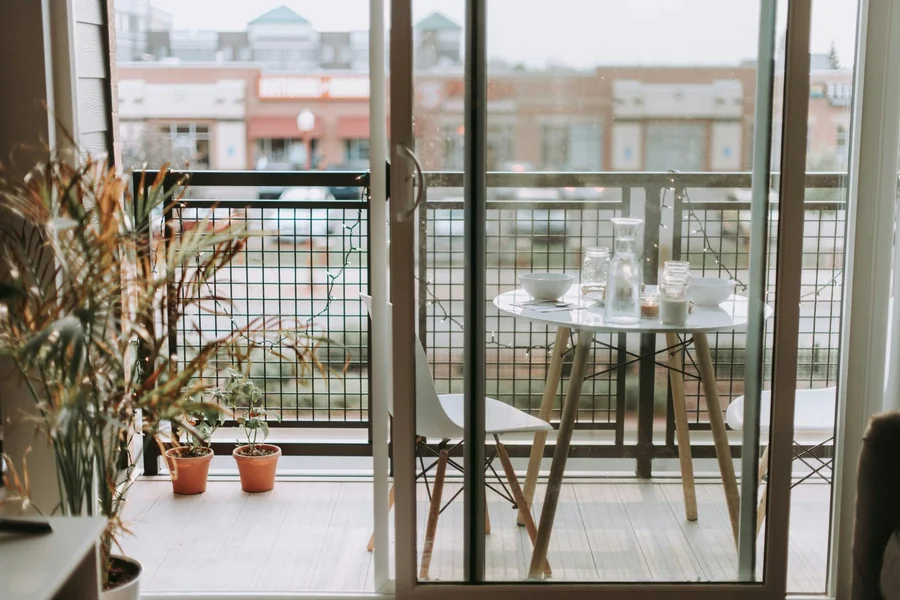
There was a time when the balcony was an afterthought: a slim rectangle of concrete just wide enough for a chair and a few potted plants. Its purpose was practical: a space to step outside for air, to hang laundry, or to gaze at the city below. But architecture, like art, is restless. The modern balcony is being reimagined not merely as an outdoor extension of the home, but as a sculptural statement, a space where structure and creativity converge in a kind of aerial gallery.
In contemporary architecture, the boundary between art and function has always been porous. Yet the balcony occupies a particularly intriguing position within this dialogue. Suspended between interior and exterior, it is both private and public, intimate and exposed. This in-between quality makes it fertile ground for innovation. Designers have begun to treat balconies as experimental surfaces for artistic exploration, merging craftsmanship with engineering in ways that challenge convention. The result is a movement that redefines not only what a balcony can look like, but what it can mean.
The Balcony as a Sculptural Form
One of the defining shifts in balcony design has been the move from linear repetition to sculptural individuality. For decades, urban housing developments were defined by grids of identical balconies. The new wave of design treats each balcony as a potential artwork, one that interacts
with light, texture, and perspective. The effect can be startling: façades that ripple, twist, or unfold like origami, creating rhythmic patterns across a building’s face.
This approach borrows heavily from the language of sculpture. Some architects use cantilevered platforms that appear to float, defying gravity. Others incorporate curving lines that evoke natural forms, blending organic softness with architectural precision. Materials play a critical role in these compositions. Powder-coated steel, sandblasted glass, carved stone, and perforated aluminum allow for surfaces that both conceal and reveal. When sunlight strikes these materials, it casts intricate shadows that change throughout the day, turning the balcony into a kinetic artwork animated by the time itself.
These sculptural designs are not just aesthetic flourishes; they redefine the relationship between a building and its environment. A façade punctuated by expressive balconies transforms into a canvas of light and shadow. Each projection and recess becomes a brushstroke that interacts with its surroundings: catching rain, filtering wind, framing views of sky and street. This dynamic quality gives the balcony a new voice in the architectural narrative. It is no longer a passive extension but an active participant in the play of space and perception.
Light as the Invisible Medium
Every sculptor understands that form cannot exist without light. In balcony design, illumination is one of the most powerful artistic tools. The interplay between transparency and opacity, between reflection and shadow, defines the mood of the space. Designers are embracing materials that respond sensuously to light: perforated metal panels that glow like lace at dusk, glass railings etched with patterns that catch the morning sun, and concrete screens with rhythmic voids that scatter delicate patterns across the floor.
At night, the transformation can be even more striking. LED technology allows for subtle gradations of tone and color, enabling balconies to become luminous sculptures in the darkness. Integrated lighting hidden within handrails or floor edges can highlight architectural contours or wash textured walls in soft gradients. Some designs even incorporate motion-sensitive light, so the balcony responds to presence.
The artistry of light extends beyond the visual. It also defines atmosphere and emotion. A well-lit balcony feels like a stage for contemplation, a private lantern glowing above the street. When light becomes sculptural, it changes how the space is experienced, setting an atmosphere for inhabitants and spectators.
Craftsmanship as Expression
The growing interest in the balcony as art has revived an appreciation for craft: a return to the tactile, the handmade, and the materially expressive. In a world of mass-produced architecture, the sculptural balcony is a celebration of individuality. Artisans are once again being invited into the architectural process, creating bespoke elements that anchor the space in sensory richness.
Wrought iron, once dismissed as ornamental excess, has found new life through contemporary reinterpretation. Forged railings now twist in abstract patterns, echoing the fluidity of ink or the geometry of a coral reef. Stonework, too, has reemerged, but not in its classical guise; today’s designers experiment with rough-cut surfaces, chiseled patterns, and layered textures that create depth and shadow. Even concrete, that most utilitarian of materials, has been elevated to an art form: polished, tinted, or imprinted with patterns that resemble textiles.
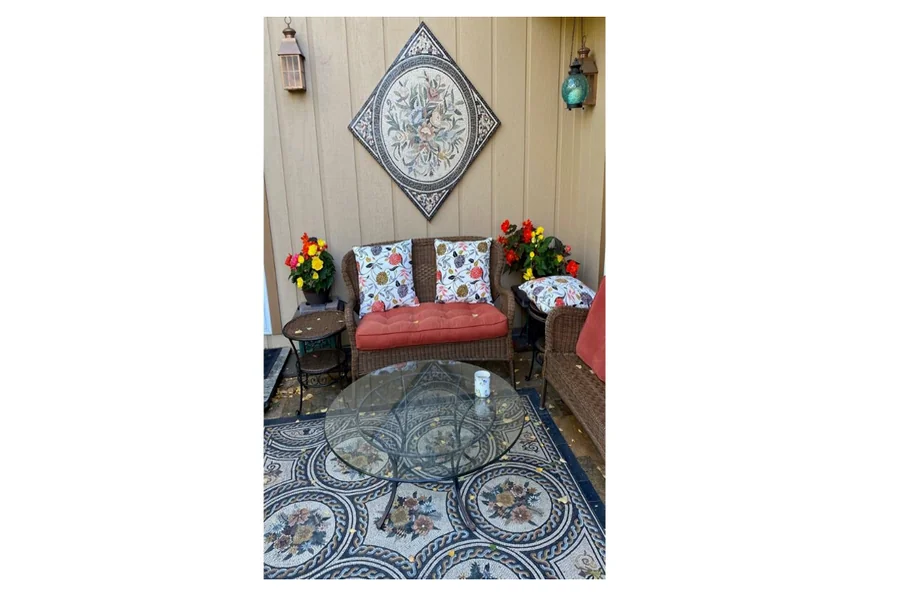
One particularly evocative trend is the incorporation of mosaic details into balcony floors or parapets. What once served as a simple border between inside and out can now become a striking composition in itself. Some designers use mosaic borders to trace the edge of a space with a whisper of color, a fine line that transforms the threshold into a painterly gesture. Others take the idea further, embedding custom mosaic artwork directly into the balcony’s surface: a piece of art that one can literally step into. These subtle interventions remind us that even the smallest architectural gesture can carry poetic weight.
The Dialogue Between Architecture and Nature
What distinguishes a sculptural balcony from a purely decorative one is its conversation with the natural world. Far from isolating inhabitants behind glass and metal, the new generation of balconies seeks harmony with light, air, and landscape. The sculptural form becomes a mediator between the built environment and nature.
Designers are increasingly attentive to how materials weather and age. A balcony of untreated wood may silver with time, echoing the bark of nearby trees. Corten steel develops a warm patina that deepens through rain and sun, becoming more beautiful as it oxidizes. Such changes are embraced, not resisted. In these spaces, impermanence becomes a part of the aesthetic: the balcony as a temporal sculpture, marked by the passage of seasons.
The integration of planting deepens this dialogue. Instead of being limited to a few pots, greenery becomes structural. Vertical planters and trellises transform walls into living surfaces, while vines weave through railings like calligraphy. Some balconies are designed as miniature gardens: suspended ecosystems where plants, architecture, and people coexist in balance. The result is more than decorative: it fosters biodiversity, filters air, and softens urban edges with texture and color. In this fusion of the organic and the constructed, the balcony becomes a modern cloister, a space for reflection within the hustle and bustle of the city.
The Emotional Geometry of Space
The artistry of the sculptural balcony lies not only in its appearance but in the emotions it evokes. Every curve, recess, or projection carries psychological resonance. A gently rounded balcony may feel nurturing and protective, while a sharply angular one suggests dynamism and tension. Designers use these geometries to shape experience, to craft atmospheres that engage both body and mind.
This emotional dimension is heightened by scale and proportion. In compact apartments, where interior rooms are measured in centimeters, a well-designed balcony offers a sense of expansion: a breath, a moment of relief. But it is not simply a question of size; it is the choreography of perspective. A narrow balcony that opens dramatically toward a view can feel as vast as a terrace. When design directs the gaze, the space gains a cinematic quality.
Material tactility reinforces these feelings. The cool touch of metal against skin, the grain of stone beneath bare feet, the sound of footsteps on wood: all become sensory brushstrokes in the composition. The balcony’s artistry thus extends beyond the visual into the realm of lived experience. It is a sculpture not just to be seen, but to be inhabited.
From Urban Façade to Personal Gallery
The rise of sculptural balconies has also transformed the cityscape. Viewed from the street, they animate buildings with personality and rhythm. Yet from within, they offer something deeply personal: a space that reflects the inhabitant’s aesthetic identity. Some homeowners treat their balconies as outdoor galleries, displaying ceramics, textiles, or even small installations. Others use color and texture to extend interior design themes outward, blurring the line between home and horizon.
This shift speaks to a larger cultural movement, one that values individuality, craftsmanship, and artistic presence in daily life. Where once the balcony was a token of status or a purely utilitarian feature, it is now a site of self-expression. Each railing curve, each pattern of light and shadow, tells a story. In dense urban settings, where private outdoor space is rare, these sculptural sanctuaries become miniature worlds unto themselves: places for solitude, for morning rituals, for the simple act of observing the city’s ever-changing theater.
Technology and the Future of Balcony Design
As architectural technologies evolve, the possibilities for artistic balcony design continue to expand. Digital fabrication allows for intricate geometries once impossible by hand. Perforated panels can be algorithmically generated to mimic the branching of trees or the flow of wind, creating façades that breathe and shimmer. Smart materials respond to temperature or light, altering transparency and color in real time.
This convergence of art, engineering, and computation opens new aesthetic territories. A balcony can now be designed as an adaptive organism, responding to climate while maintaining sculptural integrity. Yet even in this high-tech landscape, the human touch remains essential. Technology provides precision, but it is the designer’s intuition that gives the form soul. The most enigmatic balconies are those where innovation serves emotion.
